The 7 Basic Human Needs: A Practical Survival List (And What Maslow Actually Said)


The 7 basic human needs for survival are air, water, food, shelter, safety, sleep and clothing. That is our practical survival list, a simplified take on psychologist Abraham Maslow’s hierarchy of needs, and it is not a list Maslow wrote himself. Their order can shift depending on where you are and what just went wrong – except air, which you always need, no matter what.
Maslow wanted to explain what drives people, from staying alive all the way up to what he called self-actualization. I’ll admit, I’m more interested in the bottom of that pyramid.
On This Page
- What Are The 7 Basic Human Needs?
- Is This Maslow’s List? Not Exactly
- 3, 5, 7 Or 10 Basic Needs: Why Every List Is Different
- 1. Air: The Need You Never Get A Break From
- 2. Water Keeps Your Life’s Flow Going
- 3. Food: Eating Is A Delicious Way To Stay Alive
- 4. Shelter Before The Storm
- 5. Safety Is A State Of Mind
- 6. Sleep Keeps You Alert And Alive
- 7. Clothing: Dress To Impress (And To Stay Alive)
- Beyond Survival: Belonging, Purpose And A Clear Head
- How To Use The 7 Needs To Prepare
- Frequently Asked Questions
- The Bottom Line
You may have big plans for your life. But when the power goes out in winter, a warm room and something to eat suddenly look pretty good.
What Are The 7 Basic Human Needs?
Here is the short version, with each need and where it roughly fits in Maslow’s model of five levels.
| # | Need | What it covers | Where it fits in Maslow’s model |
|---|---|---|---|
| 1 | Air | Breathing air that is clean enough not to hurt you | Physiological needs |
| 2 | Water | Keeping your body hydrated | Physiological needs |
| 3 | Food | Energy and nutrients | Physiological needs |
| 4 | Shelter | Protection from the weather and the outside world | Physiological needs (in most popular versions) |
| 5 | Safety | Protection from physical and psychological harm | Safety needs |
| 6 | Sleep | Rest and recovery | Physiological needs |
| 7 | Clothing | Protection for your body (in some cases) | Physiological needs (in most popular versions) |
Clothing is the one with the asterisk, because in a lot of situations you can do without it for a while.
In a blizzard, you cannot.

Is This Maslow’s List? Not Exactly
Maslow described five levels of needs: physiological, safety, love and belonging, esteem, and self-actualization. Our seven survival needs live almost entirely in the bottom two.

Here is a fun one. That famous pyramid? As far as researchers can tell, Maslow never drew it.
Other people turned his ideas into a triangle years later, and the triangle stuck so well that it is easy to assume it came straight from him.
And you have to fill each level before you can move up to the next one, right?
Wrong. Maslow himself wrote that the order is not nearly as rigid as it sounds. A study of people in 123 countries later found that different needs were tied to different parts of wellbeing, rather than people climbing one level at a time.
3, 5, 7 Or 10 Basic Needs: Why Every List Is Different
Search for basic human needs and you will find lists of three, five, seven, ten, even twelve. Somebody has to be wrong, right?
Not necessarily. Different lists answer different questions, so before counting the needs, take a look at what the list is actually trying to explain:
- Survival lists, like our seven, cover what your body needs to get through the short term: air, water, food, shelter, safety, sleep and clothing.
- Maslow’s hierarchy has five levels and covers human motivation as a whole, from physiological needs up to self-actualization.
- Self-determination theory names three psychological needs: competence, autonomy and relatedness (more on that below).
So when one person says there are 3 basic needs and another says 7, they may simply be talking about different things.
1. Air: The Need You Never Get A Break From
The air you breathe is a mixture of gases that is essential to your survival. You get so used to it that you cannot usually see, taste or smell it.
Some notable exceptions to the smell rule are cold air vs hot air (you might not like cold temperatures, but you certainly love the smell of crisp cold air), indoor vs outdoor air, night vs daytime air, or city vs country air.
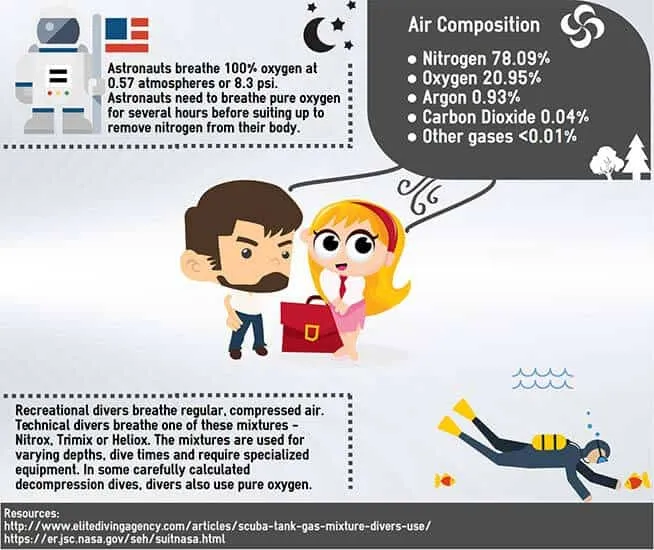
But wait, why does air have so much nitrogen in it? I thought it is oxygen we breathe?
Geeky stuff: air is mostly nitrogen, with oxygen a distant second. The part your body actually runs on is the oxygen.
Breathe in and breathe out.
You Need Clean Air, Not Just Any Air
Having air is one thing, and having air that does not hurt you is another.
The World Health Organization estimates that outdoor air pollution caused 4.2 million premature deaths worldwide in 2019.
Pollutants such as smoke, soot and fine dust are the kind of stuff you do not want to breathe day in and day out. You can check the air quality where you live at AirNow, which also tracks wildfire smoke.
The air risk preppers tend to forget is the one they create themselves.
Generators and fuel-burning furnaces give off carbon monoxide, a gas you cannot see or smell. The CDC recommends a battery-operated or battery backup CO detector near where people sleep, so put one on your shopping list. I know, it is not as exciting as a new knife.
2. Water Keeps Your Life’s Flow Going
Nobody needs convincing that water matters, so I’ll skip the lecture. The tricky part is that there is no single number that fits everyone.
Ready.gov puts it plainly: individual needs vary depending on age, health, physical condition, activity, diet and climate.

For prepping, the official rule is simpler: the same Ready.gov page says to store at least one gallon of water per person per day for several days, for drinking and sanitation.
Don’t forget pets.
More water is always better, right? Not quite.
Drinking too much water can also be dangerous. In a study of Boston Marathon runners, 13% had low blood sodium, and gaining weight during the race was a risk factor.
The point is the same as above: water is a need to plan for, not a contest to win.
Got lost on a hiking trip and you are not sure how to find water? Read our guide on how to find and purify water in the wild.
3. Food: Eating Is A Delicious Way To Stay Alive
Food is the need that gets the most attention from preppers, and for good reason. It is also the one where you have the most wiggle room in the short term.
What Your Body Actually Needs From Food
Your body needs energy from food, plus micronutrients, which is the fancy word for vitamins and minerals. The old food pyramid below makes the point I care about: variety beats living on one thing.

What To Keep In Your Pantry
You do not need anything fancy. Ready.gov’s suggested emergency food list includes:
- Ready-to-eat canned meats, fruits and vegetables (and a can opener)
- Protein or fruit bars
- Dry cereal or granola
- Peanut butter
- Dried fruit
- Canned juices
- Non-perishable pasteurized milk
- Food for infants, if you have one
- Comfort foods
That last one is not a joke. A bad week is easier with something you actually like to eat.
Survival Food Is About Planning, Not Perfection
In an emergency, you are not counting superfoods, you are making what you have last:
- Plan meals and portions so your supplies go further.
- During a power outage, follow Ready.gov’s power outage rules: the fridge keeps food cold for about four hours, and a full freezer holds its temperature for about 48 hours.
- Throw away food that has been at 40 degrees or higher for two hours or more, or that has an unusual odor, color or texture. When in doubt, throw it out.
- Rotate the food you keep in storage, so the oldest cans get eaten first.
- Long-term, brush up on your gardening knowledge and start your own garden. Put some native plants in the mix.
“Food will win the war” was the rallying cry of the U.S. Food Administration during World War I, when people at home cut back so more food could go to the troops and the Allies. Your pantry is your own little war effort.
4. Shelter Before The Storm
Whether you are in your house, your car, a tent or an igloo in Greenland, every shelter shares a common purpose – it protects you from the elements. A few of the natural hazards you need shelter from are:
- Cold
- Heat
- Storms, tornadoes and hurricanes
- Dust storms
- Rain, sleet, snow and hail

Keep in mind that not every shelter fits every hazard – a tent is fine for a rainy night and useless in a tornado.
Your local emergency management office is the place to check for where to go when a specific storm is coming.
A Shelter Keeps Your World Private
Besides protecting you from Mother Nature’s bad moods, your home is the place where you control who gets in and who sees what:
- Lock your windows and doors, and use whatever alarms or cameras make sense for you.
- Keep your valuables locked and out of sight.
- Do not let strangers know about your work or vacation schedules (sorry, that includes posting on Facebook).
If you need shelter right now in the U.S., you can call 211 to find local help.
You Shelter With The People You Care About
Sheltering with people you trust means you can share the work: cooking, keeping an eye on the kids, looking after whoever is sick. And it also gives you something to survive for.
5. Safety Is A State Of Mind
Safety means being protected against physical or psychological harm, and it is one of the basic human needs that the others can affect.
For example, someone whose food is being withheld is not safe, even if nobody has laid a hand on them.
Where You Are Changes What “Safe” Means
- At home: poisoning and falls are two of the leading causes of accidental death in the U.S., so the medicine cabinet and the stairs deserve your attention too.
- On the road: distracted driving and drunk driving are two of the big risks you can actually control. The CDC counts dozens of deaths from alcohol-impaired crashes every day.
- At work: if your job comes with safety training, take it seriously, even when it feels like a box-ticking exercise.
- Out and about: know where you are going, tell someone when you are going somewhere unfamiliar, and trust your gut when a place feels wrong.
You cannot control everything, and that is the part people struggle with.
You can control your choices, though, and it helps to separate responsibility from blame when something goes wrong anyway.
Safety also includes your mind.
In the U.S., if you or someone you love is in crisis, call or text the 988 Suicide & Crisis Lifeline. In an emergency, call 911.
6. Sleep Keeps You Alert And Alive
Sleep is the need people cheat on the most, no, the one they brag about cheating on, because it does not feel like an emergency.
Until it does.

How Much Sleep Do You Need?
According to the CDC, most adults need at least seven hours of sleep a night, and babies, kids and teens need more. The NHLBI says sleep:
- Supports healthy brain function and your physical health
- Helps with learning and forming long-term memories
- Supports growth and development in children and teens
Sleep Deprivation Can Deprive You Of Your Health
Modern life pushes you to be more efficient and productive than ever before. If you regularly cut into your shut-eye, sleep deficiency is linked to problems like these:
- Trouble focusing
- Being more forgetful
- Worse judgment and slower reactions
- A higher risk of some health problems over time
Judgment is the one that matters most in a survival situation. Fatigue is taken seriously enough in aviation that airline pilots work under strict federal rest rules. If it matters for someone landing a plane, it matters for someone deciding whether to drive through a flood.
Randy Gardner famously stayed awake for about 11 days over the winter of 1963-64. Please do not try to beat that.
7. Clothing: Dress To Impress (And To Stay Alive)
You may argue that you can survive indefinitely without clothes. Hey, it might even be fun, right?
Well, yes and no.
In the short term, clothing matters most in extreme weather and in hazardous jobs. In the long run, going without means a lot more exposure to sun, cold, cuts and dirt.
Clothes have always played a big role in human society:

- To cover up
- To present ourselves in a more flattering light, to a romantic interest or to everybody else
- To fit in and look the way society expects
- For hygiene
- To build a unique image of ourselves
- To show our occupation or place in the chain of command
- To hide your beer belly
- To protect ourselves from the elements and a few other hazards
Clothes Protect You From The Elements
They keep you warm, cool, dry and insulated from extreme weather.
Clothes Protect You From Certain Hazards
Some good examples are work gloves, steel toe boots, specialty cold weather gear such as ice fishing boots, or full body suits such as diving or astronaut suits.
You Wear Clothes Because Society Expects You To
Not wearing clothes may not threaten your immediate survival, but society expects you to wear them. That makes clothing a social need as much as a physical one.
Beyond Survival: Belonging, Purpose And A Clear Head
Our list starts with survival. People need more than that, and I’d argue the needs above the survival line matter more in a long emergency than most preppers think.
Self-determination theory, developed by psychologists Richard Ryan and Edward Deci, describes three psychological needs: competence, autonomy and relatedness. In plain English: feeling like you are capable, feeling like you have a say, and feeling connected to other people.
Here, Richard Ryan, a professor emeritus of psychology at the University of Rochester, walks through those core needs himself.

The connection part is the one preppers tend to skip.
You can stock a basement and still be alone in it. The Harvard Study of Adult Development has followed people for decades, and its researchers found that close relationships, more than money or fame, are what keep people happy throughout their lives.
Robert Waldinger, a Harvard psychiatrist who directs the study, explains what it found about relationships in this talk.
That is one reason a survival group is worth thinking about, even if you are a lone-wolf type.

What about attitude? It will not replace water or a warm coat.
Having supplies is one part. You still have to decide what to do when things go wrong, and that is where I would start working on thinking clearly under pressure.
How To Use The 7 Needs To Prepare
Here is the practical part. Go through the list and ask one honest question per need:
- Air: Do you have a working CO detector, and do you know how to check your local air quality?
- Water: How many days of water do you have stored for everyone in the house, pets included?
- Food: Could you eat for a few days without a store or a working fridge?
- Shelter: Where would you go if your home was not an option tonight?
- Safety: Does everyone in the family know who to call and where to meet?
- Sleep: If the power went out, could everyone still sleep warm (or cool) and safe?
- Clothing: Does every person have weather-appropriate clothes and sturdy shoes they can grab fast?
Any “no” is your next task. If you are not sure where to begin, this guide will help you translate priorities into a starting task.
Frequently Asked Questions
What Are The 7 Basic Human Needs?
Our practical survival list is air, water, food, shelter, safety, sleep and clothing. It is a simplified, survival-first take on Maslow’s hierarchy of needs.
Did Maslow Say There Are 7 Basic Needs?
No. Maslow described five levels: physiological, safety, love and belonging, esteem, and self-actualization. The seven survival needs mostly sit inside his first two levels.
What Are The 3 Basic Needs Of Humans?
It depends on which framework you mean. Self-determination theory names three psychological needs: competence, autonomy and relatedness. If you mean physical survival, a three-item list is just a shorter cut of the seven above, and I would put air at the top of it.
Which Basic Need Is The Most Important?
Air, because you cannot go without it for long. After that, the order depends on your situation: in a blizzard, shelter and clothing jump the line, and in a heat wave, it is water and shade.
The Bottom Line
You will not find a perfect list of human needs, and that is ok.
What you need is a list you can actually act on. Understanding needs is one part of practical psychology for preparedness, and the rest is what you do with it.
Which of the seven needs did you realize you have been ignoring? Share your story in the comments section. I would love to hear how you are tackling it.


